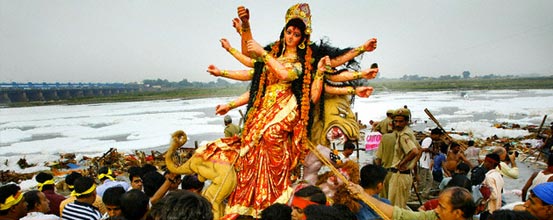
Pushkar Fair
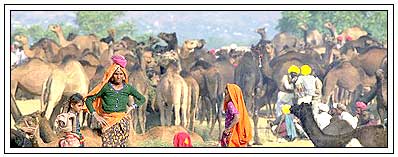
This fair is held at Pushkar town, 11 km from Ajmer
in Rajasthan for twelve days annually during October- November. This cultural
and trade cum religious fair is an attractive and lively spectacle with Rajasthani
men and women in their colourful traditional attire, saffron-robed and ash smeared
Sadhus (holy men) and thousands of bulls, cows, sheep, goats, horses and camels
in richly decorated saddles. Perhaps the largest cattle fair in the world, it
attracts more than one lakh people, from all over Rajasthan as well as tourists
from different parts of India and abroad.
Trading of cattle, camel races and dazzling displays
of bangles, brassware, clothes, camel saddles and halters make the fair colourful.
Necklaces of glass beads from Naguar, pottery, printed textiles from Jodhpur
and Ajmer are all on sale here. Farmers, cattle traders and breeders buy and
sell their animals, leather whips, saddles etc. There are facilities for camel
rides also.
This livestock fair coincides with the climaxing
of a religious celebration. Pushkar is among the five main places of pilgrimage
mentioned in the Hindu scriptures. It has a large number of temples including
one of the only two temples dedicated to Lord Brahma in India . 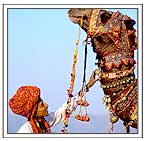 Hundreds
of thousands of devotees take a ritual dip in the holy Pushkar lake on the day
of the Kartik Purnima (full moon night of the Kartika month) and worship at
the Brahma temple (Jagat Pita Shri Brahma Mandir). It is believed that Lord
Brahma, the creator, wished to perform a 'yagna' following his long years of
penance. During his sojourn in search of a place for yagna, Brahma dropped a
lotus from heaven which created the lake Pushkar . It was on the Karthika night
that a drop of nectar fell in this lake, thereby making it sacred. Pilgrims
flock from all over India to be in Pushkar at this auspicious time. They also
believe that all the 330 million Gods and Goddesses are present at Pushkar Lake
during the occasion. Hundreds
of thousands of devotees take a ritual dip in the holy Pushkar lake on the day
of the Kartik Purnima (full moon night of the Kartika month) and worship at
the Brahma temple (Jagat Pita Shri Brahma Mandir). It is believed that Lord
Brahma, the creator, wished to perform a 'yagna' following his long years of
penance. During his sojourn in search of a place for yagna, Brahma dropped a
lotus from heaven which created the lake Pushkar . It was on the Karthika night
that a drop of nectar fell in this lake, thereby making it sacred. Pilgrims
flock from all over India to be in Pushkar at this auspicious time. They also
believe that all the 330 million Gods and Goddesses are present at Pushkar Lake
during the occasion.
The trading which involves a great deal of bargaining
between the cattle traders and the buyers add to the spirit of the fair. Apart
from the religious rituals and trading, people participate in a number of cultural
and sporting events. The variety of folk dances, dramas and songs lend colour
and melody to the atmosphere that is already charged with excitement of the
camel races and the cattle fair. The sweeping expanse of the desert becomes
dotted with thousands of camels, stalls and camping families. The Rajasthan
tourism Development Corporation has taken adequate measures to facilitate convenient
access of the fair site and to accommodate the fairgoers.
|